


CNC Operator Authorization and Access Control in Manufacturing
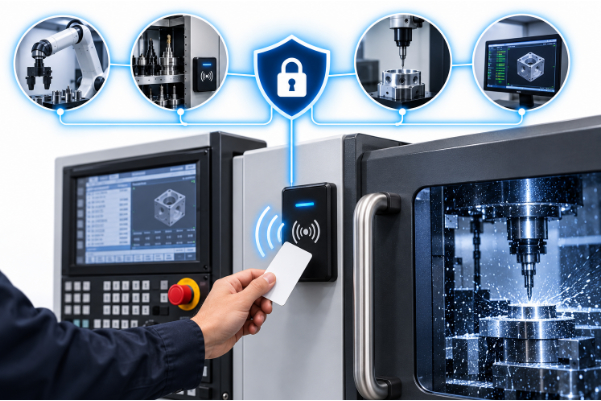
As manufacturing systems become more automated and interconnected, the risks associated with operator interaction increase. CNC operator authorization and access control systems are becoming essential for managing who can interact with machines, automation, and production workflows in modern manufacturing environments.
Modern CNC environments extend far beyond basic machine operation. Operators interact with automation systems, tool data platforms, measurement devices, and connected workflows. With more access points comes greater complexity—and greater potential for error.
In this environment, controlling who can perform which actions is just as important as controlling the machining process itself.
Why Operator Authorization Matters in Modern Manufacturing
Traditional manufacturing environments often rely on training, supervision, and experience to ensure proper machine operation. While important, these methods are not always sufficient in today’s complex production environments.
Manufacturers now face:
-
Multiple operators interacting with shared machines and automation cells
-
Increasingly complex workflows and interconnected systems
-
The need for consistency across shifts, machines, and facilities
-
Greater emphasis on safety, traceability, and compliance
Without structured access control, the risk of error increases significantly. Common issues include:
-
Incorrect machine operation or setup
-
Unauthorized parameter changes
-
Skipped process steps
-
Increased scrap, downtime, or safety incidents
Operator authorization addresses these challenges by ensuring that only properly trained personnel can perform defined actions within the manufacturing process.
What is Badge-Based Operator Authorization
Badge-based operator authorization uses technologies such as RFID or digital credentials to identify operators and control access to machines, devices, and software systems.
Each operator is assigned a unique badge tied to their training level, certifications, and permissions.
When an operator interacts with a system—whether a CNC machine, HMI, or automation platform—the system verifies their identity and determines what actions they are authorized to perform.
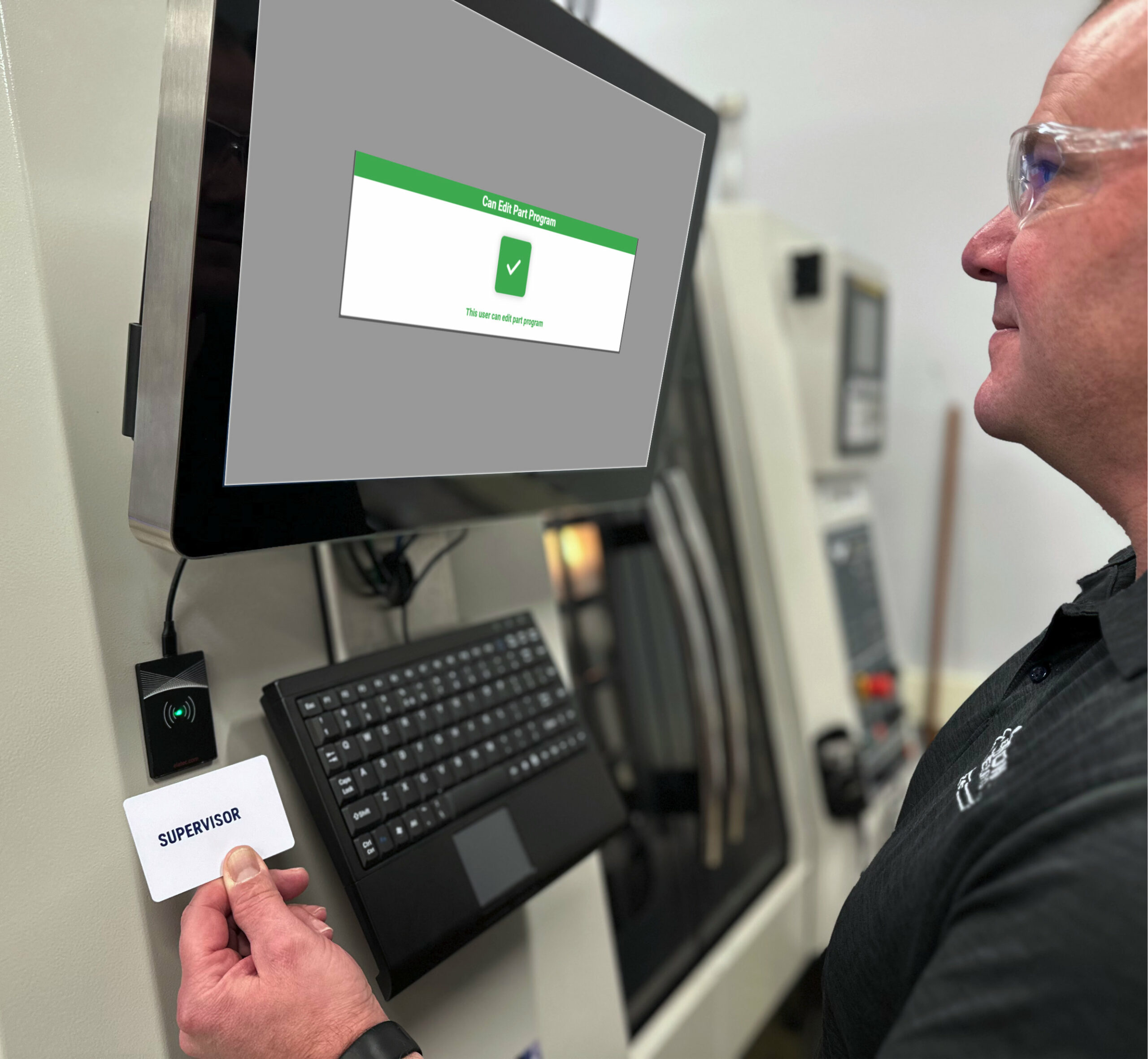
Modern authorization systems are built on flexible architectures. Machines can maintain real-time authorization lists locally, while also supporting centralized management for consistent access control across multiple machines, cells, or facilities.
Permissions can be applied at multiple levels, including:
-
Machine access and operation
-
Program selection and execution
-
Tool setup and offset adjustments
-
Interaction with automation systems
-
Access to specific software features or workflows
In advanced implementations, control can extend down to individual actions, including specific button presses or process steps—ensuring that every interaction is validated before it occurs.
Enforcing Process Control and Training Compliance
Operator authorization systems play a critical role in enforcing standardized processes while aligning actions with operator training.
Rather than relying on memory or oversight, these systems embed process control directly into machine and workflow interactions.
This approach:
-
Automatically enforces training compliance by linking permissions to operator qualifications
-
Reduces the risk of unqualified machine operation
-
Ensures process steps are executed in the correct sequence
-
Prevents unauthorized changes to critical parameters
For example:
-
Setup procedures can require verification before machining begins
-
Tool loading steps can restrict offset changes to trained personnel
-
Production programs can be locked from unauthorized edits
-
Maintenance functions can be limited to qualified technicians
By integrating authorization into workflows, manufacturers create a system where processes are executed consistently—regardless of operator or shift.
Reducing Risk and Preventing Misuse
In CNC manufacturing, even minor errors can have significant consequences.
Incorrect offsets, unintended program changes, or bypassed steps can lead to:
-
Scrapped parts
-
Damaged tooling or fixtures
-
Machine downtime
-
Operator safety risks
Badge-based authorization reduces these risks by ensuring that only qualified individuals can access critical functions.
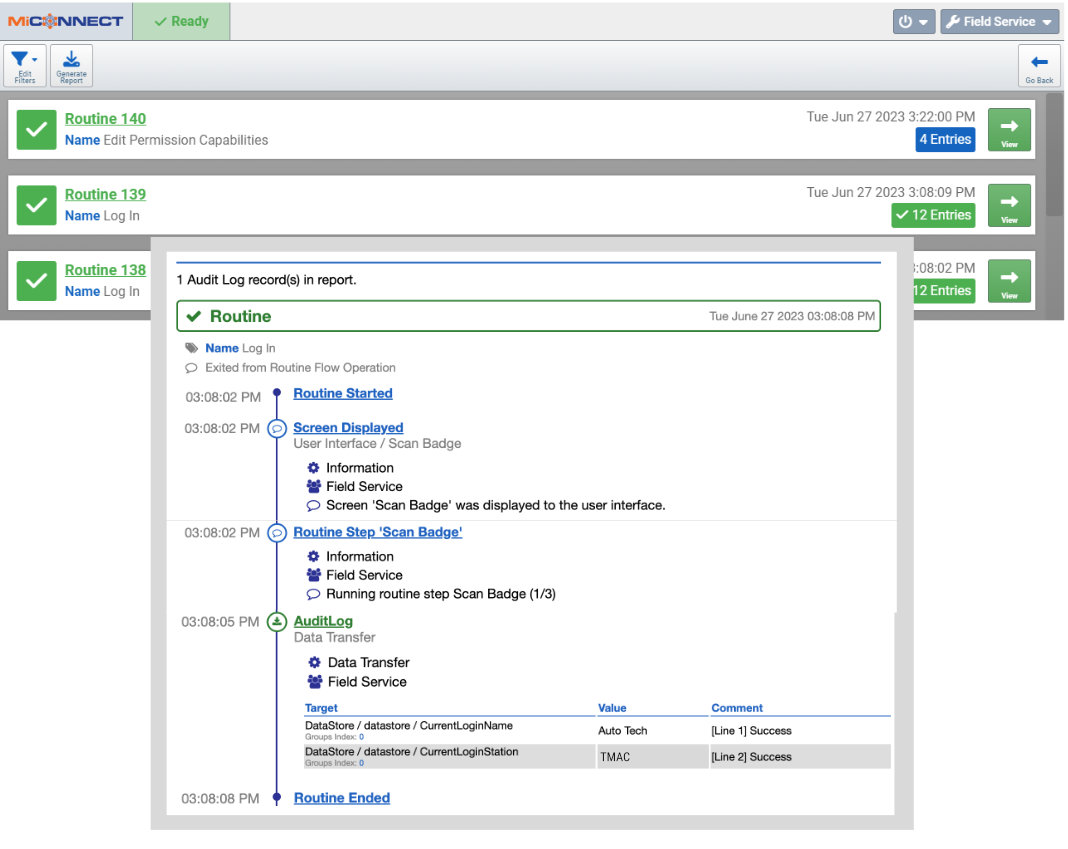
It also improves accountability and traceability by recording operator activity. Every interaction—whether starting a cycle, modifying a parameter, or executing a process step—can be tracked and reviewed.
This visibility supports continuous improvement and makes it easier to identify root causes of process issues.
Supporting Safety, Traceability, and Compliance
As manufacturing becomes more regulated—especially in industries such as aerospace, medical, and energy—traceability and compliance are essential.
Operator authorization systems support these requirements by:
-
Logging operator activity at the machine and process level
-
Creating detailed audit trails of actions and changes
-
Ensuring only certified personnel perform critical operations
-
Reinforcing safe machine operation
These capabilities help manufacturers meet audit and safety requirements while maintaining consistent and verifiable production processes.
Enabling Connected and Intelligent Manufacturing Systems
Operator authorization is not just about restricting access—it is about enabling smarter, more controlled manufacturing environments.
When integrated with connected manufacturing systems, authorization can:
-
Link operator permissions to machine states and workflows
-
Standardize operations across machines, cells, and facilities
-
Guide operators through complex procedures with real-time validation
-
Align operator access with real-time production activity
This creates a coordinated system where both machines and operators function within clearly defined process boundaries.
From Access Control to Intelligent Process Orchestration
As manufacturing systems continue to evolve, operator authorization is becoming part of a broader shift toward fully orchestrated production environments.
In these environments, machines, automation systems, and software platforms are no longer operating independently. Instead, they are coordinated through structured workflows that define not only what happens—but who is allowed to make it happen.
This is where authorization moves beyond simple access control and becomes a key component of process orchestration.
Manufacturers are increasingly implementing platforms that:
-
Connect machines, devices, and software systems
-
Define and enforce process workflows
-
Control operator interaction at each step
-
Adapt permissions dynamically based on machine state or production requirements
By combining machine connectivity with operator authorization, these systems ensure that every action—whether automated or manual—fits within a controlled, repeatable process.
Connecting Authorization with Machine Logic and Workflow Control

Platforms that combine machine connectivity with authorization—such as configurable application environments that allow manufacturers to define workflows, permissions, and operator interactions—enable this level of control directly at the machine, device, and software level.
For example, systems like MiConnect, developed by Caron Engineering, allow manufacturers to build custom applications that link operator authorization with machine logic, automation workflows, and production data.
This makes it possible to:
-
Enforce operator permissions at every step of a process
-
Guide users through required workflows with built-in validation
-
Integrate machines, automation equipment, and software into a unified system
-
Adapt access dynamically based on real-time production conditions
Rather than treating authorization as a standalone function, this approach embeds it directly into the manufacturing process—ensuring that both machines and operators operate within a coordinated system.
The Future of Operator-Controlled Manufacturing
As automation continues to evolve, the role of the operator is shifting—from manual execution to guided interaction with increasingly intelligent systems.
To support this transition, manufacturers need systems that ensure every action is:
-
Authorized
-
Traceable
-
Consistent
-
Aligned with defined processes
Operator authorization will play a central role in:
-
Reducing process variability
-
Improving safety and compliance
-
Supporting unattended and semi-autonomous operations
-
Standardizing production across global facilities
Manufacturers who implement structured authorization systems gain more than access control—they gain confidence that every process is executed correctly.
Because in modern manufacturing, process control includes not only the machine—but every interaction that drives it.
Ready to Get Started?
If you're looking to improve process control, operator accountability, or workflow consistency, we can help.
Connect with the Caron Engineering team to explore how authorization, machine connectivity, and workflow automation can support safer, more controlled manufacturing operations.