











AI in Manufacturing Operations: Real-Time Intelligence for CNC Machining
Artificial intelligence is quickly becoming one of the most discussed technologies in modern manufacturing. From predictive maintenance to production planning, AI promises to transform how factories operate. But the most impactful applications of AI in manufacturing are not happening in reports or dashboards—they are happening directly on the shop floor, during machining. This is where AI shifts from being an analytical tool to becoming an operational advantage.
When CNC machines, sensors, automation equipment, and manufacturing software systems are connected and able to interpret data instantly, they can begin making intelligent decisions during the machining process itself—optimizing cutting conditions, coordinating automation cells, and guiding operators when needed.
From Machine Data to Manufacturing Intelligence
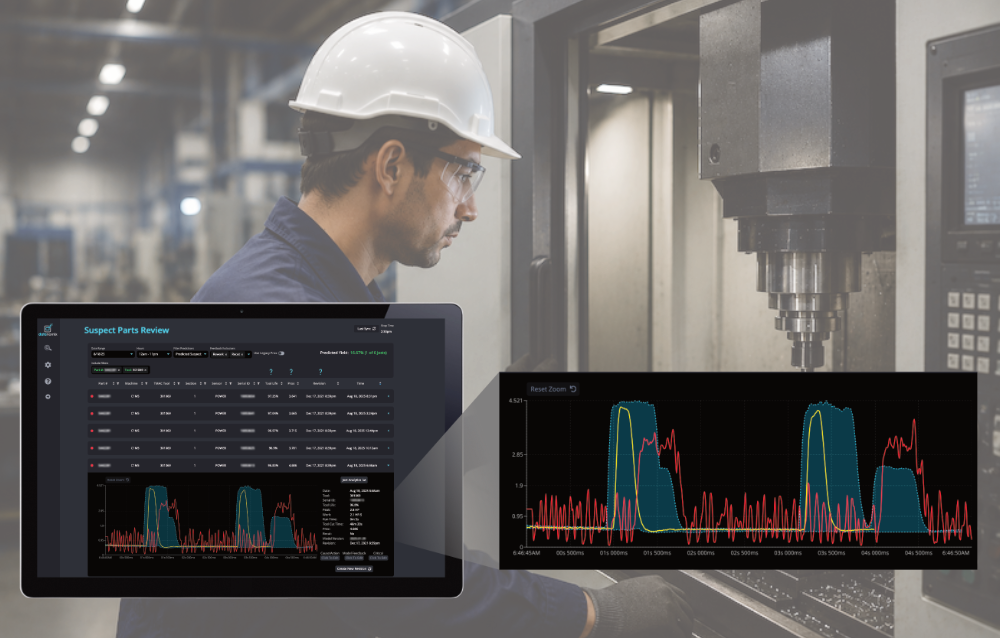
Modern manufacturing systems generate enormous amounts of data.
Examples include:
- Spindle load and cutting forces
- Vibration and machine condition signals
- Axis motion and feedrate performance
- Tool wear and breakage detection
- Dimensional measurement data from gauges or CMMs
- Automation system status and part flow
Historically, much of this information remained isolated within individual machines. It might be logged for later analysis, but rarely influenced the machining process in real time.
AI-driven manufacturing changes that model.
By combining real-time machine data with intelligent logic, manufacturing systems can analyze process conditions as they occur and determine the best response automatically.
For example, a system might detect rising cutting loads that indicate tool wear or material variation. Instead of waiting for an operator to notice the issue, the system can adjust feed rates, notify the operator, or stop the process to prevent damage. This type of real-time decision making during machining is where AI begins delivering measurable value on the shop floor.
Unified Automation Cells: Connecting Machines, Devices, and Systems
AI becomes significantly more powerful when data flows between devices across an automation cell.
A modern manufacturing cell may include:
-
CNC machines
-
Robots or pallet systems
-
Tool monitoring systems
-
Electronic gauging equipment
-
Sensors and machine condition monitoring
-
Manufacturing execution or supervisory software
When these systems operate independently, each device performs its own task—but the overall process remains fragmented. When machines and systems exchange data, manufacturers can create unified automation cells that coordinate activity across the entire production environment. In this environment, intelligent systems can interpret signals from multiple sources and respond accordingly.
For Example:

Instead of reacting to problems after they occur, the manufacturing system actively manages the process in real time.
AI in CNC Machining: Supporting Operators, Not Replacing Them
A common misconception about AI in manufacturing is that it replaces human expertise. In reality, the goal is the opposite: to support operators and engineers with better information and decision-making tools. Even experienced machinists cannot continuously monitor every variable during a complex machining cycle. AI-assisted systems help by identifying patterns and conditions that would otherwise go unnoticed.
When intervention is required, the system can guide operators by:
-
Confirming the correct tool is loaded before machining begins
-
Verifying that required setup steps have been completed
-
Alerting operators to abnormal machining conditions
-
Ensuring proper process sequences are followed
Rather than replacing operators, intelligent manufacturing systems enhance human decision-making with real-time process visibility.
Real-Time Intelligence During Cutting
One of the most powerful applications of AI in manufacturing occurs during the cutting process itself.
Machining conditions constantly change:
- Material hardness varies.
- Tool wear progresses gradually.
- Chip evacuation conditions fluctuate.
These variables influence cutting forces, tool life, surface finish, and cycle time.
When manufacturing systems can interpret cutting data in real time, machines become capable of responding automatically.
Feed rates can increase when loads are light. Feeds can decrease when loads rise. Tool wear can be detected before catastrophic failure occurs.
This transforms machining from a static, programmed process into a dynamic and responsive manufacturing system.

Building the Foundation for AI-Driven Manufacturing
AI in manufacturing does not begin with algorithms—it begins with machine connectivity and reliable process data. Machines, sensors, automation equipment, and software systems must first communicate with one another. Once this infrastructure exists, manufacturers can begin layering intelligent decision-making on top of the process. Many of the technologies that enable AI-driven manufacturing are already widely used today.
Real-time tool monitoring, adaptive machining control, machine connectivity platforms, and automated dimensional compensation systems provide the data foundation required for intelligent manufacturing environments. Importantly, these technologies are not experimental. The systems that enable intelligent machining—real-time monitoring, adaptive control, and machine integration—have been proven on shop floors for many years.
What is evolving today is how manufacturers combine and interpret this data to enable smarter and more autonomous decision-making. At Caron Engineering, our focus has long been on enabling connected manufacturing ecosystems where machines, sensors, and automation systems work together to optimize the machining process.
Technologies such as TMAC for real-time cutting intelligence, MiConnect for connecting machines and automation systems, and AutoComp for closed-loop dimensional control represent practical building blocks manufacturers use today to move toward smarter manufacturing operations. These systems provide the reliable, real-time data required for intelligent manufacturing strategies.
Looking Ahead
As AI continues to evolve, its role in manufacturing will expand beyond analytics and reporting. The next generation of smart factories will rely on real-time manufacturing intelligence—systems capable of observing, interpreting, and responding to machining conditions automatically.
Manufacturers who connect their machines, unify their process data, and enable intelligent decision-making are building the foundation for the next era of manufacturing performance. Because the future of manufacturing isn’t just automated. It’s intelligent.
Ready to Get Started?
The future of AI in manufacturing starts with connected machines and reliable process data. Technologies like real-time monitoring, machine connectivity, and closed-loop control provide the foundation for smarter manufacturing operations.
Contact Caron Engineering to learn more about how we can support your journey toward intelligent manufacturing.
AI in manufacturing refers to systems that analyze machine data and automatically make decisions to optimize production processes, improve quality, and prevent downtime.


