









Tool Life Isn't Time: Why Part Counters Don't Tell the Whole Story
Tool life is often treated as a fixed number.
"This insert lasts 100 parts."
"We change the drill every four hours."
"That cutter runs one shift before replacement."
While these rules of thumb simplify production, they assume something that rarely exists in manufacturing:
That every cut is identical.
In reality, tools don't know how many parts they've produced. They don't know what time it is.
They only know the work they've performed.
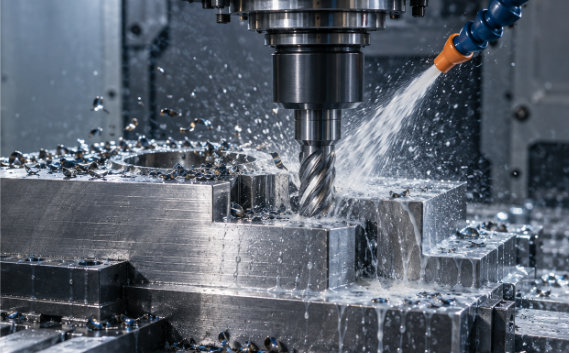
Material variation, changing engagement conditions, interrupted cuts, and fluctuations in cutting forces all affect wear. Two identical tools running the same program may reach end-of-life at completely different times. Yet many shops still rely on timers and part counters to determine when tools should be replaced. The problem is that tool life isn't measured by time—it is measured by cutting work.
Why Tool Life Is Inherently Variable
Even in highly controlled machining environments, no two cutting cycles are exactly alike.
Several factors influence tool wear:
- Material hardness variation
- Interrupted cuts
- Tool engagement changes
- Chip evacuation conditions
- Coolant delivery
- Machine dynamics
- Thermal effects
As a result, one insert may comfortably machine 120 parts while another reaches failure after only 80. Both tools may have run the same program, but they experienced different cutting conditions. The assumption that tool wear progresses uniformly simply isn't true.

Start with Your Biggest Production Challenge

Part counters are useful, but they provide only a rough estimate of tool life. To prevent failures, manufacturers often establish conservative replacement intervals. A tool capable of machining 120 parts may be removed after 90 parts simply to avoid risk.
This approach creates two problems:
Premature Tool Replacement
Changing tools too early wastes usable tool life and increases tooling costs.
Increased Risk of Failure
Extending intervals too far can result in broken tools, scrap, and machine downtime. Because part counters have no understanding of actual cutting conditions, they force manufacturers to choose between productivity and risk.
Tool Wear Doesn't Happen All At Once
Contrary to popular belief, most tools do not fail suddenly. Wear is a gradual process. Cutting forces increase. Heat generation changes. Tool geometry slowly degrades. Load signatures evolve.
Eventually, the process reaches a point where catastrophic failure occurs. The challenge is identifying when that point is approaching. Part counters can't do this. They simply count.
Measuring Work Instead of Time
A more accurate approach is to monitor the amount of cutting work performed by the tool.
Instead of asking:
"How long has this tool been running?"
Manufacturers should ask:
"How hard has this tool been working?"
Two inserts machining 100 parts may experience dramatically different wear depending on:
- Material consistency
- Engagement conditions
- Feed rates
- Cutting forces
- Interrupted cuts

By monitoring actual cutting load and accumulated work, manufacturers can better understand how wear develops and make more informed tool replacement decisions.
Moving Toward Condition-Based Tool Management
Condition-based tool management shifts the focus from estimated life to actual tool performance. Rather than relying solely on time or part counts, manufacturers can monitor cutting conditions in real time to identify wear trends and predict when tools are approaching end-of-life.
This approach provides several advantages:
- Increased tool utilization
- Reduced tooling costs
- Improved process stability
- Fewer catastrophic failures
- Greater confidence in unattended machining
- More consistent part quality
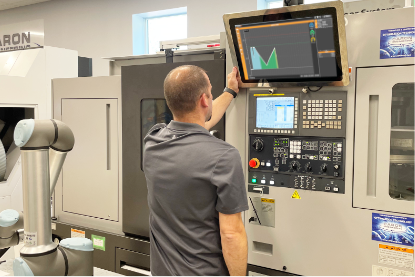
Modern systems such as TMAC utilize real-time spindle load analysis and accumulated cutting work to provide a more accurate representation of tool wear than part counters alone. Instead of replacing tools based on assumptions, manufacturers can make decisions based on actual machining conditions and real-time wear data.
The Future of Tool Life Management
Timers and part counters will always have a place in manufacturing. But they are estimates—not measurements.
As machining processes become more automated and cycle times become more valuable, relying solely on fixed intervals becomes increasingly inefficient. The future of tool life management lies in understanding the relationship between cutting conditions and wear.
Because tools don't fail because the clock says so.
Ready to Get Started?
Understanding how cutting conditions affect tool wear helps manufacturers maximize tool utilization, reduce risk, and move beyond traditional part counters. Contact Caron Engineering to explore how TMAC can help you use tools to their maximum useful life while automatically protecting your machining process.