












TMAC Optimizes Grinding Efficiency and Prevents Costly Spindle Failure in Aerospace Manufacturing
| Industry: | Aerospace |
| Machine: | Grinding Machine |
| Tooling: | Standard |

Challenge
A manufacturer of aircraft engine components was machining precision parts on a Mägerle MFP 30 grinding machine, where process consistency and uptime are critical. The operation relied on a canned dressing cycle to maintain grinding wheel condition—a fixed routine that did not account for real-time cutting conditions. While effective for quality, this approach added unnecessary cycle time and limited process efficiency.
The customer initially deployed TMAC (Tool Monitoring Adaptive Control) to gain deeper insight into the grinding process and identify opportunities to reduce cycle time without compromising part quality. Dressing is essential in grinding to restore wheel sharpness and ensure dimensional consistency, but the existing canned cycle operated independently of actual tool condition—resulting in excess dressing and lost productivity.
Solution
Using TMAC’s real-time process monitoring, the customer transitioned from time-based, canned dressing to trigger-based dressing. Instead of dressing on a fixed schedule, TMAC now initiates dressing only when monitored process signals deviate from established limits.
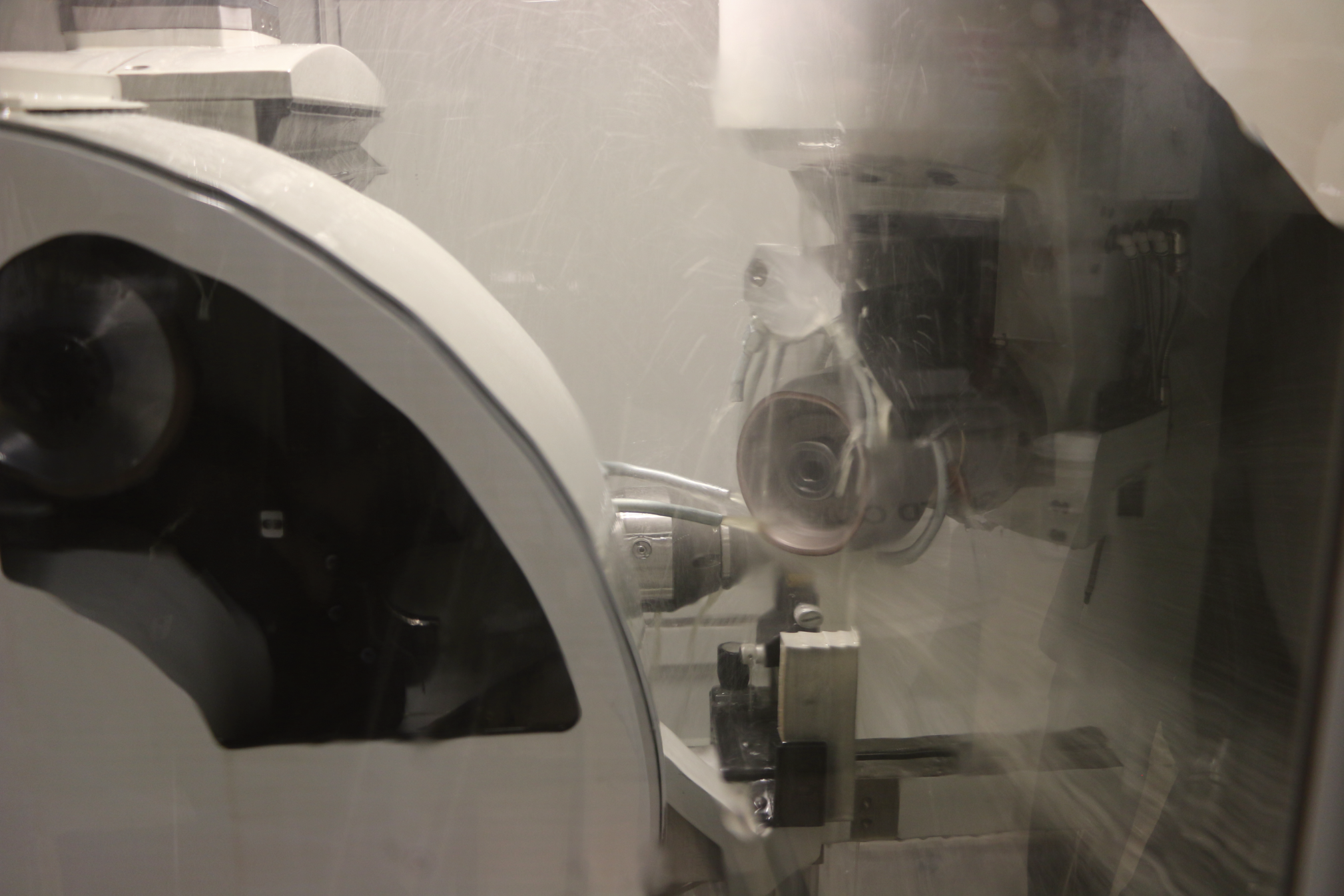
This shift delivered immediate benefits:
- Reduced unnecessary dressing cycles
- Shorter overall cycle times
- Improved grinding efficiency while maintaining strict quality standards
An Unexpected Save
While monitoring the grinding process, TMAC—using integrated vibration sensor analysis—detected an abnormal spindle condition on the dressing wheel. TMAC issued an alert indicating a developing anomaly. Operators paused production to investigate and confirmed that the spindle was nearing failure.
By acting early, the customer was able to retire the spindle proactively rather than experiencing an in-process failure. This avoided a full spindle rebuild, prevented collateral machine damage, and significantly reduced downtime compared to a catastrophic failure scenario.
The Results
- Cycle time reduced through adaptive, trigger-based dressing
- Early detection of spindle degradation
- Avoided catastrophic spindle failure and extended downtime
- Lower maintenance and repair costs
- Increased confidence in process and machine health monitoring
The Impact
Following this experience, the customer has continued to trust TMAC’s guidance and has expanded its use across additional machines. TMAC’s spindle bearing health monitoring is now active throughout more of their grinding operations, providing early warnings, protecting critical assets, and supporting long-term reliability.
TMAC has become a trusted tool not only for process optimization, but also for predictive machine protection—delivering measurable time savings, cost avoidance, and peace of mind in a high-precision aerospace environment.
Results
- Reduced cycle time with adaptive, trigger-based dressing
- Prevented spindle failure and downtime through early detection
- Lowered maintenance costs with improved machine health confidence
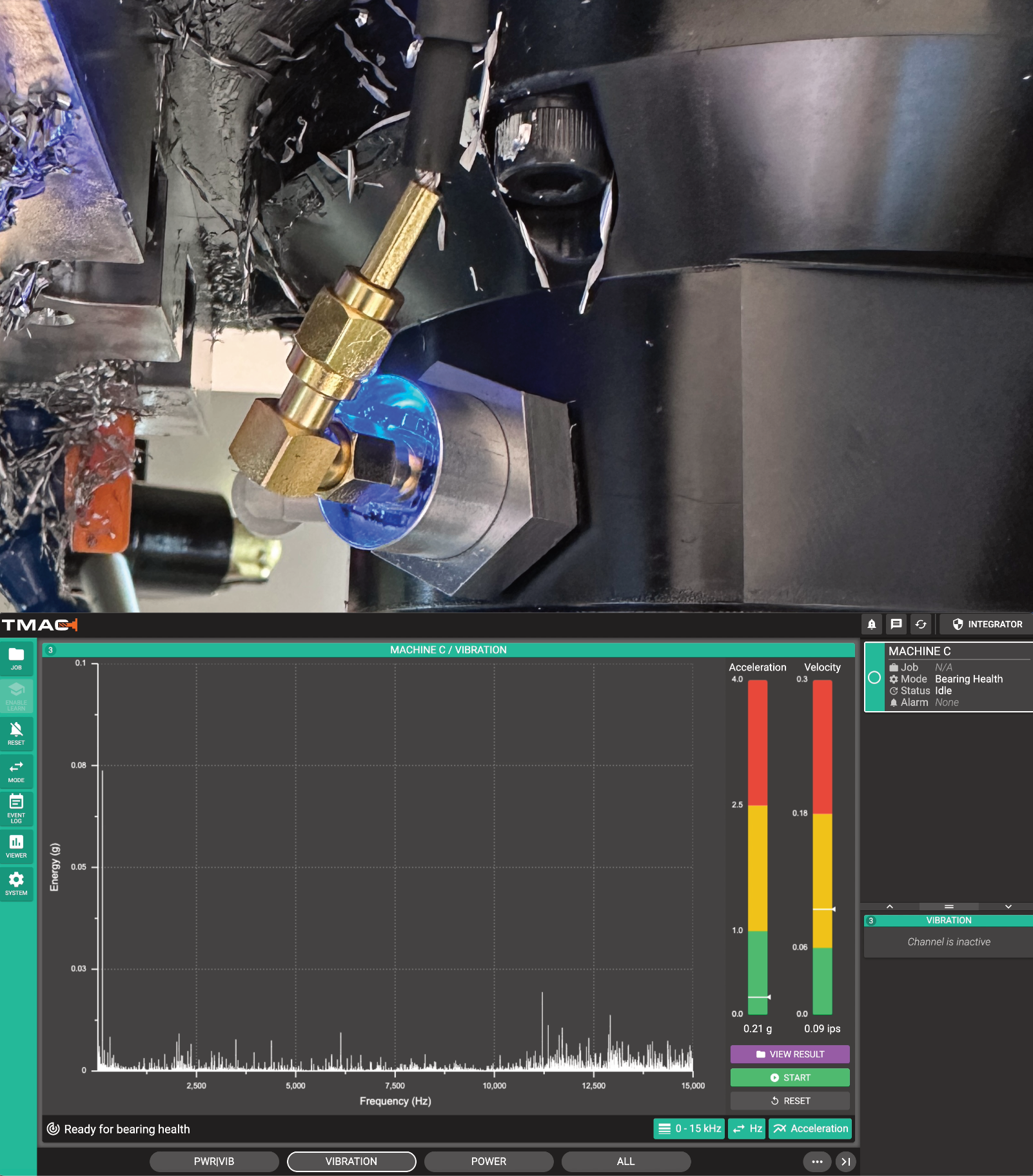
Spindle Bearing Health is monitored with custom sensors and analyzed and visualized on TMAC interface as shown.