








Real-Time Adaptive Control: The Key to Faster, More Stable CNC Machining
Automation isn’t just about robots and conveyors—it’s about making smarter decisions automatically during the machining process. While many manufacturers have embraced automation for part handling or data feedback, one of the most overlooked opportunities is in-process cutting optimization. This is where adaptive control makes the difference.
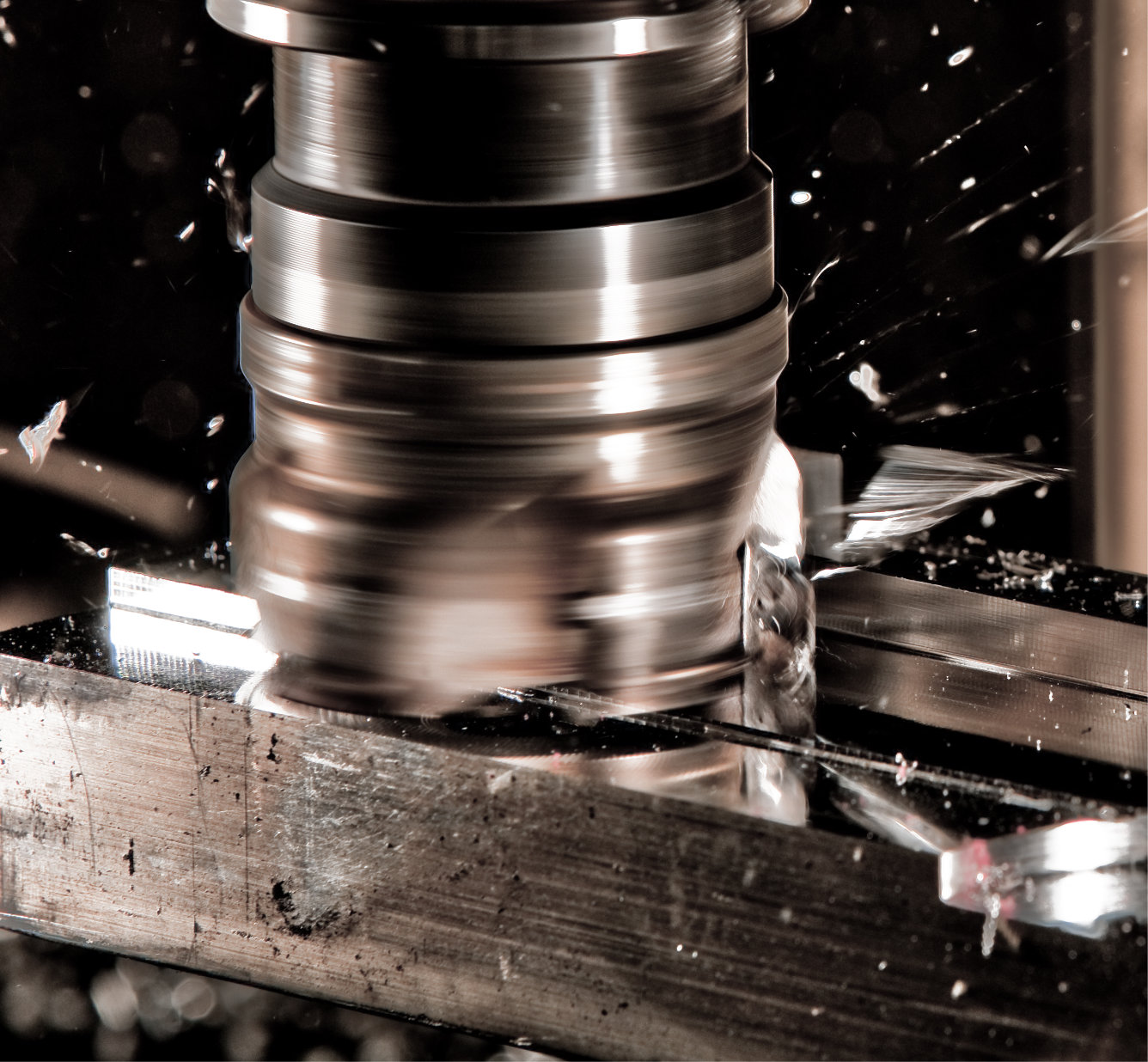
If you’re running complex geometries, machining expensive alloys, or producing high-value components where integrity is non-negotiable, you already know that cutting conditions rarely remain constant. Even within a single cycle, variables shift, tool wear accumulates, material hardness varies, and chips pack unexpectedly.
These subtle changes can lead to inefficient machining, broken tools, extended cycle times, or worse—scrapped parts that took hours to produce. Adaptive control addresses this problem at its source: the cut itself.
What is Adaptive Control in CNC Machining?
Adaptive control is a real-time, closed-loop feedback system that adjusts the machine’s cutting parameters based on what is actually happening during the cut—not just what was programmed.
Traditional CNC programs are written with conservative assumptions. Programmers must account for worst-case scenarios to protect tools and parts. The result? Machines often run slower than they need to.
Adaptive control removes that limitation.
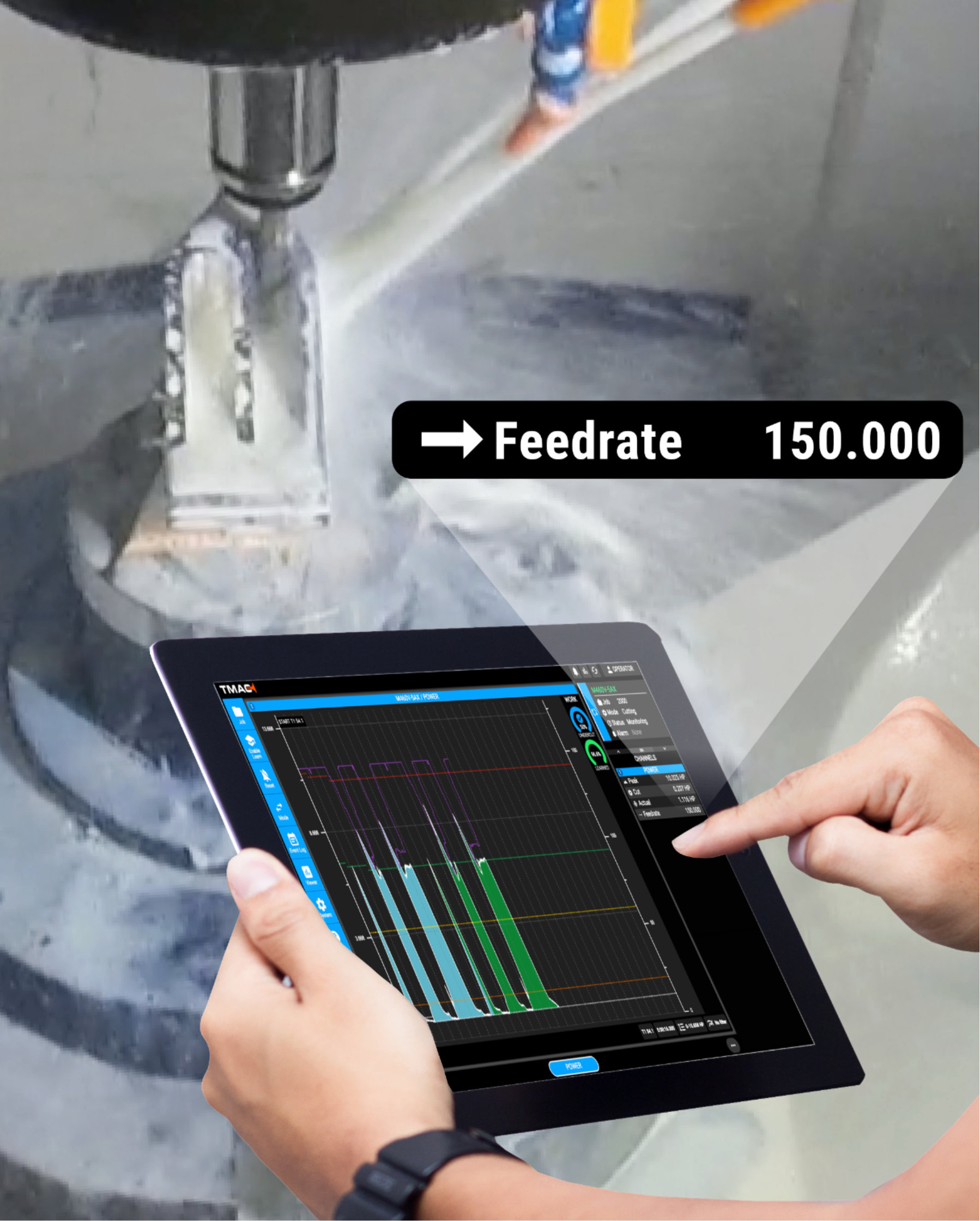
At Caron Engineering, we deliver this capability with TMAC (Tool Monitoring Adaptive Control). TMAC continuously measures the true spindle power load during machining, analyzing cutting data thousands of times per second. TMAC learns the optimal power profile for each tool and cutting segment, continuously comparing it against user-defined limits to calculate tool wear in real time during the cut.
When cutting conditions are favorable—such as air cuts, light radial engagement, or clean material sections—TMAC adaptive control automatically increases the feed rate to optimize cutting and reduce cycle time. When the load rises due to tool wear, material variation, or depth of cut, TMAC instantly reduces the feed rate to maintain a constant spindle motor power, to extend tool life and protect the cutting process. In the event there is an extreme spike in cutting load, TMAC stops the machine entirely to protect the tool and part.
It’s like giving your CNC machine a built-in sense of feel—allowing it to react intelligently and automatically to real-world cutting conditions.
Why Adaptive Feed Rate Control Matters
Without adaptive control, you’re forced to choose between productivity and protection. Program too aggressively, and you risk tool breakage. Program too conservatively, and you sacrifice throughput. Adaptive control eliminates that compromise by dynamically optimizing feed rates in real time.
The Results are Measurable
- Reduced cycle times by increasing feeds during lighter cutting conditions
- Extended tool life by minimizing unnecessary overload during heavy engagement
- Prevention of catastrophic tool breakage through instantaneous load detection
- Improved surface finish and dimensional stability through stabilized cutting forces
Because TMAC logs all cutting data, manufacturers also gain traceability and process insight that can be used to refine programs, optimize tooling strategies, and validate machining performance across shifts or facilities.
High-Value Parts Demand Intelligent Control

In industries such as aerospace, medical device manufacturing, energy, and defense, machining is not just about speed—it’s about integrity.
High-value components often involve:
- Difficult-to-machine materials like titanium or Inconel
- Long cycle times with deep cavity work
- Tight tolerances requiring process consistency
- Expensive raw material costs
- Strict quality and traceability requirements
In these environments, a single tool failure can destroy hours of machining time and thousands of dollars in material. Worse yet, subtle tool wear that goes undetected can compromise part integrity without immediate visibility.
Adaptive control adds a layer of protection that manual oversight simply cannot match. It continuously monitors tool load signatures, detecting both gradual wear trends and sudden anomalies. That means tools are replaced predictably—based on actual cutting behavior—not guesswork.
For high-value manufacturing, this level of process awareness isn’t optional. It’s foundational.
Integrating Adaptive Control Into Your Process
One of the most powerful aspects of TMAC is that it does not require rewriting CNC programs or replacing legacy equipment.
TMAC integrates directly with your existing CNC controls and can be configured for individual tools, specific operations, or defined cutting segments within a program. It adapts to your process—not the other way around.
Whether you are:
- Running 5-axis contouring
- Performing heavy roughing in hardened steel
- Machining long-run aerospace structural parts
- Or pushing cycle times in high-volume production
Adaptive control can be implemented incrementally and scaled as needed.
Smarter, Faster, Safer Machining—Automatically
With adaptive control in place, machines no longer operate blindly. They respond.
They accelerate when possible.
They protect themselves when necessary.
They extend tool life based on actual performance data.
They maintain consistency across material batches and shifts.
Instead of reacting to failures, manufacturers gain confidence that their machining process is actively optimizing itself in real time. You stop leaving productivity on the table—and you stop accepting unnecessary risk.
FAQs - Adaptive Feed Rate Automation
Adaptive control in CNC machining is a real-time system that automatically adjusts cutting parameters based on actual conditions during the cut. Instead of relying on fixed programming, it monitors spindle load and reacts instantly to changes in tool wear, material variation, or engagement.
Caron Engineering’s TMAC adaptive control system measures cutting load thousands of times per second and dynamically adjusts feed rates to match real cutting conditions. This allows CNC machines to run at optimal performance while maintaining process stability and part quality.
Adaptive control isn’t a new concept—it’s proven technology that continues to evolve with modern manufacturing demands. At Caron Engineering, adaptive control has been embedded into our tool monitoring systems since the 1990s, long before Industry 4.0 became a buzzword. By combining real-time sensing with closed-loop control, we’ve continuously refined how machines respond to cutting conditions—optimizing performance, extending tool life, and protecting every cycle. It’s this legacy of innovation that allows manufacturers today to move toward truly intelligent machining.


