








Tool Presetter vs. Laser Tool Setter: Which Do You Need?
In today’s CNC manufacturing environment, efficiency and precision are everything. Cycle times are compressed. Tolerances are tighter. Skilled labor is harder to find. And the margin for error is smaller than ever. One topic that frequently sparks debate on the shop floor is how best to manage CNC tool geometry offsets. Should manufacturers rely on an offline tool presetter, or is an in-machine laser tool setter the better solution?
Each technology solves a different part of the machining challenge. When used together, they create a more stable and efficient tooling process. And when paired with automated tool data transfer systems such as Caron Engineering’s ToolConnect, presetters become even more powerful by eliminating manual data entry.
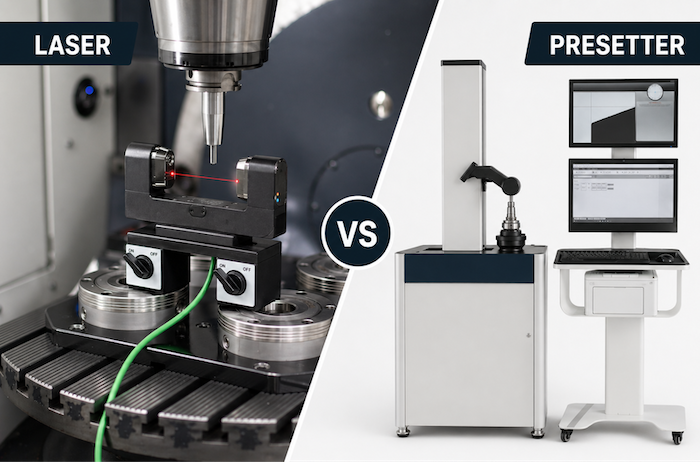
Key Differences: Laser and Presetter
Tool presetters and laser tool setters both measure tools, but they serve different roles in the CNC machining process.
Tool presetters focus on offline measurement and preparation. Tools are measured before they ever reach the machine, allowing operators to stage assemblies and load verified geometry values into the CNC.
Laser tool setters, on the other hand, operate inside the machine. They verify tool position in the spindle and detect tool wear or breakage during production.
Understanding this distinction helps manufacturers design a tooling process that improves both setup efficiency and machining stability.
The Case for CNC Tool Presetters
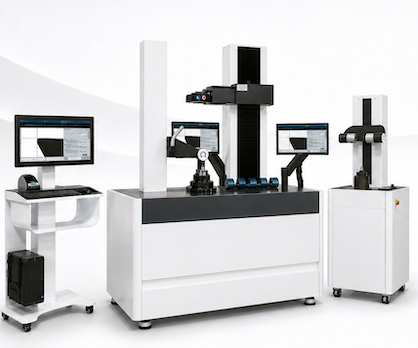
Tool presetters allow operators to measure and set tool geometry—length, diameter, and sometimes runout—offline, outside of the machine. This happens before the tool ever reaches the spindle.
Because measurement occurs away from the CNC machine, tools can be prepared while production continues uninterrupted. Instead of stopping a machine to touch off tools or manually measure offsets, assemblies are fully verified and ready to load when needed.
The advantages are significant:
-
Production continuity: Tools are measured offline without halting machining operations.
-
Time savings: Verified tool assemblies can be loaded quickly, reducing setup time and machine idle time.
-
Accuracy: High-precision measurement ensures consistent offsets and reduced variability.
-
Setup efficiency: Especially valuable for complex jobs, high tool counts, and multi-machine environments.
Presetters are particularly effective in high-mix, high-precision shops where tool assemblies are prepared in advance and staged for rapid changeover. But there’s a common bottleneck: once the tool is measured, the tool offset data still needs to be entered into the CNC control. Manual data entry induces the risk of lost time and human errors. One mistyped offset can result in scrap, broken tools, or damaged parts.
Eliminating the Manual Data Entry Gap
One of the overlooked challenges with tool presetting isn’t the measurement itself—it’s what happens to the data afterward.
In many shops, tool length and diameter values measured on the presetter still have to be manually typed into the CNC control. Even with experienced operators, manual entry introduces risk. A misplaced decimal, a transposed number, or loading the wrong offset field can quickly lead to scrap, broken tools, or machine damage.
To solve this, many manufacturers are moving toward automated tool data transfer systems that move presetter measurement data directly into the CNC control.
These systems typically use RFID tags, barcodes, or digital interfaces to transfer verified tool data automatically—eliminating manual transcription and ensuring that the exact measured values reach the correct offset fields in the machine.
When presetter measurement, automated data transfer, and in-machine verification are combined, manufacturers gain a much more reliable tooling process. This is where systems like ToolConnect help bridge the gap. By pairing a presetter with automated data transfer, verified tool measurements can be transferred directly into the CNC control via RFID or barcode scan—eliminating manual entry and improving data integrity from the tool room to the spindle.
The Case for In-Machine Laser Tool Setters in CNC Machining

While presetters excel before production begins, in-machine laser tool setters add protection during production.
Laser systems measure tools directly inside the CNC machine, verifying tool length and diameter offsets in the actual cutting environment.
Their key advantages include:
-
Real-time measurement: Captures the tool’s true position in the spindle.
-
Wear detection: Identifies gradual tool wear as it develops.
-
Breakage detection: Instantly recognizes tool failure before additional damage occurs.
-
Automation support: Enables lights-out machining with greater confidence.
Even the most precisely preset tool can experience runout, pullout, or micro-chipping once cutting begins. Laser setters provide the in-process validation that protects part quality.
In environments machining aerospace components, medical devices, or other high-value parts, this protection is critical. A broken tool late in a long cycle can destroy hours of machining time—and expensive raw material.
Why You Need Both
The debate shouldn’t be about which technology is better. It should be about what stage of the machining process you’re protecting.
-
Presetters ensure accuracy and efficiency before production begins—verifying tool geometry and preparing tools for rapid setup.
-
Automated tool data transfer systems ensure those measurements reach the CNC control accurately and without manual entry.
-
Laser tool setters ensure accuracy continues during production—monitoring tool condition and protecting parts in real time.
Together, they create a layered strategy:
-
Accurate tool data enters the machine correctly.
-
The tool is verified in the spindle before cutting.
-
Wear data is detected during machining.
This isn’t redundancy—it’s process control.
Offline accuracy plus in-process validation equals stability.
And stability is what enables higher spindle utilization, longer unattended runs, and confidence in complex machining environments.

Final Thought
Manufacturers don’t need to choose between offline precision and in-machine protection. The strongest results come from combining both. The offline accuracy of a presetter—enhanced with automated data transfer for seamless tool data management—paired with the real-time monitoring of an in-machine laser creates a process that is efficient, protected, and scalable.
In modern CNC manufacturing, precision isn’t just about measuring tools. It’s about managing tool data intelligently—from the tool room to the CNC spindle—to support stable machining, lower scrap, and confidence in lights-out operation.
Ready to Get Started?
If you’re evaluating in-machine laser measurement, tool presetters, or a combined approach to improve tool setup and verification, we can help you define the right fit for your process.
Connect with our team at caroneng.com to build a practical strategy around your machines, tolerances, and production goals.